


Robot Polishing System
Industrial Mirror Polishing Buffing Machine
8K Mirror Polishing Machine for Stainless Steel | Eco-Friendly Acid-Free System
Aluminium Plate Coil Mirror Polishing Machine
6K Mirror Buffing Polishing Machine for Metal Surfaces
High-precision metal mirror polishing machine
Pneumatic-pressure 8K Mirror Polishing Machine
Belt-type 8K Mirror Stainless Steel Polishing Machine
High Gloss Mirror Buffing &Polishing Machine
No.8 8K Finishing Mirror Buffing Polishing Machine
Super 8K Mirror Polishing Machine
Industrial Metal Buffing Machine
Titanium Surface Mirror Buffing Machine
Coil To Coil No.4 Finished Grinding Line
Sheet To Sheet NO.4 Finished Grinding Line
Metal Coil Grinding Machine
Metal Sheet Brushing Machine
Copper Polishing Grinding Machine
Titanium Surface Polishing Brushing Machine
Aluminum Plate Polishing Brushing Machine
Stainless No.4 Grinding Machine
Belt Brushing & Grinding Machine
Stainless HL Grinding Machine
Roller HL Grinding Machine
Belt HL Brushing Machine
Dry HL Finishing Machine
Wet HL Finishing Machine
Dry No.4 &HL Grinding Machine Line
Wet No.4 &HL Brushing Machine Line
Scotch-Brite finished Machine For Metal Surface
Scotch-Brite Finished Machine
Stainless Steel Scotch Brite Polishing Machine
Wet Scotch Brite Machine Line
Fully Automatic Scotch Brite(SB) Machine Line
SB Oscillator Machine
SB Grinding Machine
Scotch Brite with Oscillator
Dry Scotch Brite Machine
Four roller Scotch Brite Grinding Machine
Thick Board Stainless Steel Vibration Grinding Machine
Vibration Grinding
Stainless Steel Vibration Grinding Machine
AFP machine
Anti-Fingerprint Roller Coater machine
Anti-Fingerprint Pre-coated machine
Anti-Fingerprint Film Coating machine
Anti-Fingerprint Nano-Coating machine
Precision Sheet Cutting Line for Decorative Metal Processing
Leveling and Precision Cutting Line for Metal Sheet Processing
Automatic Coil Uncoiling
By:Lebon
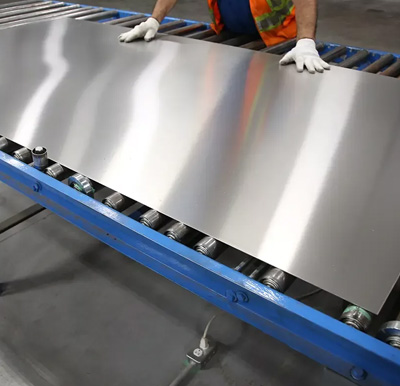
Aluminum sheets and coils are widely used in architectural decoration, household appliances, transportation, electronics, solar energy, automotive components, and industrial equipment. Before coating, anodizing, laminating, or further fabrication, the aluminum surface must often be ground to remove rolling marks, minor scratches, oxidation, and other surface defects.
Compared with stainless steel, aluminum is softer, more sensitive to heat, and more likely to suffer from abrasive loading, material smearing, uneven grinding, and surface deformation. Therefore, aluminum grinding requires equipment with stable pressure control, effective cooling, suitable abrasive consumables, and precise feed-speed regulation.
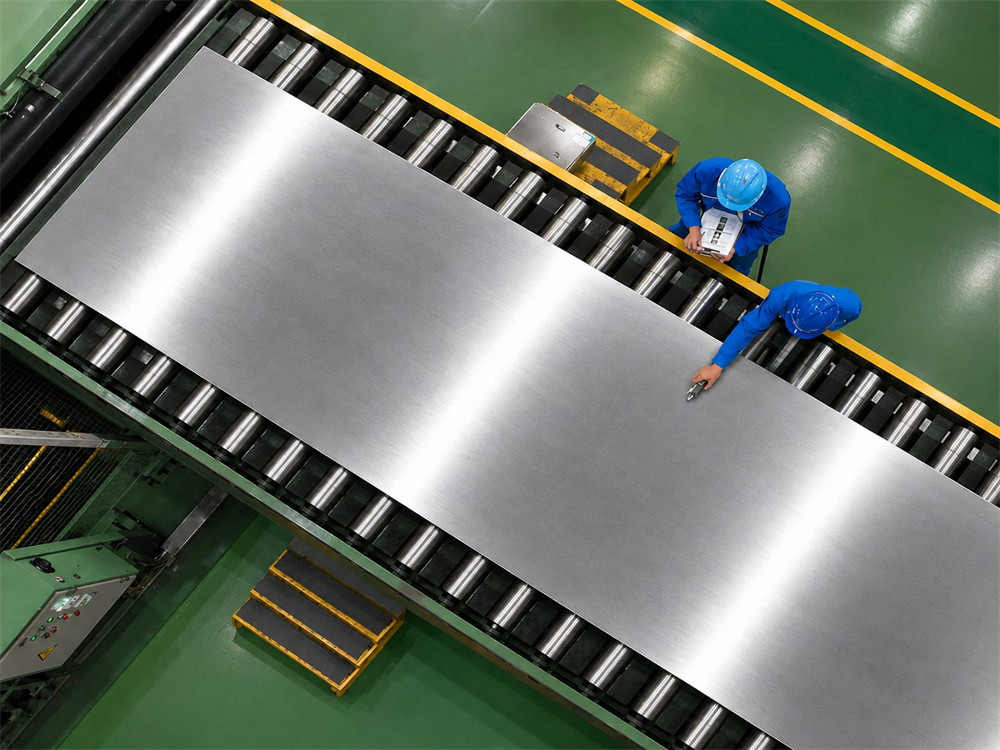
Lebon provides customized Wet Grinding Lines for aluminum sheets and coils. These production lines help manufacturers remove rolling textures, improve surface uniformity, and upgrade aluminum materials to a higher and more consistent surface grade.
Lebon’s aluminum wet grinding solutions are suitable for:
Aluminum sheet manufacturers
Aluminum coil producers
Aluminum service centers
Decorative aluminum suppliers
Anodized aluminum manufacturers
Automotive aluminum processors
Appliance-panel manufacturers
Architectural metal companies
Lebon has supported customers in South Korea and India, providing customized aluminum sheet and coil grinding solutions according to material grade, workpiece dimensions, surface condition, production capacity, and target finish.
Lebon Wet Grinding Lines can be configured for:
Aluminum sheets
Aluminum plates
Aluminum coils
Decorative aluminum panels
Anodizing-grade aluminum sheets
Coating-grade aluminum materials
Appliance aluminum panels
Automotive aluminum panels
Building-decoration materials
The production line can be designed for sheet-to-sheet or coil-to-coil operation depending on the customer’s manufacturing process.
The 1xxx series contains commercially pure aluminum with excellent corrosion resistance, electrical conductivity, and formability.
Common applications include:
Electrical components
Reflective panels
Chemical equipment
Decorative sheets
General industrial products
Because 1xxx aluminum is relatively soft, excessive grinding pressure may cause surface smearing, waviness, or excessive material removal. A carefully controlled wet grinding process is therefore required.
The 3xxx series is mainly alloyed with manganese and offers good strength, corrosion resistance, and formability.
Typical applications include:
Building panels
Roofing materials
Appliance housings
Heat exchanger components
Decorative products
Wet grinding can remove rolling marks and prepare the material for coating, painting, anodizing, or lamination.
The 5xxx series contains magnesium and provides good strength, excellent corrosion resistance, and strong welding performance.
It is widely used in:
Transportation equipment
Marine components
Automotive panels
Industrial enclosures
Architectural applications
Because some 5xxx alloys have higher strength, abrasive selection and grinding pressure must be adjusted to achieve efficient defect removal without creating an uneven appearance.
The 6xxx series is alloyed mainly with magnesium and silicon. It offers a strong balance of mechanical properties, machinability, corrosion resistance, and surface-treatment performance.
Typical applications include:
Automotive components
Architectural panels
Industrial structures
Electronic housings
Transportation equipment
The surface must often be upgraded before anodizing, coating, or decorative finishing. Controlled wet grinding helps produce a cleaner and more uniform substrate.
Rolling and handling processes may leave several types of defects on aluminum surfaces:
Rolling marks
Roll chatter marks
Minor scratches
Oxide layers
Handling marks
Uneven surface color
Local pressure marks
Surface contamination
Inconsistent gloss
Small pits and imperfections
These defects can become more visible after anodizing, painting, coating, or decorative treatment. Removing them before downstream processing helps improve the final appearance and reduce rejection rates.
Rolling marks are linear textures or irregular patterns created during aluminum rolling.
If they are not removed, they may cause:
Uneven anodized color
Visible lines after painting
Inconsistent decorative appearance
Poor coating uniformity
Reduced product grade
Increased customer rejection
Greater polishing requirements downstream
Lebon Wet Grinding Lines apply controlled abrasive-belt grinding to reduce or remove these marks and create a more uniform surface.
The machine must provide enough cutting ability to remove the original rolling pattern without causing excessive stock removal.
Grinding performance depends on:
Abrasive type and grit
Belt speed
Feed speed
Grinding pressure
Number of grinding heads
Material grade
Initial defect depth
Lebon configures the processing stages according to the customer’s incoming material and target surface.
A high-quality aluminum surface should have consistent texture, gloss, and color across the entire sheet or coil width.
Uneven grinding may produce:
Dark and light areas
Overlapping marks
Local roughness variation
Uneven linear texture
Different appearance between batches
Stable machine pressure and automatic abrasive-belt tracking help improve surface consistency.
Aluminum conducts heat efficiently, but its soft surface may still be damaged by high local grinding temperatures.
Excessive heat may cause:
Material smearing
Abrasive loading
Surface discoloration
Local deformation
Reduced abrasive life
Wet grinding continuously cools the contact area and removes grinding residue.
For thin aluminum sheets and coils, excessive material removal may affect thickness tolerance and flatness.
The production line therefore requires precise control of:
Grinding pressure
Belt speed
Feed speed
Contact-roller hardness
Number of processing passes
Wet grinding offers several important benefits for aluminum surface processing.
Aluminum particles can easily adhere to abrasive belts. Coolant helps flush away grinding residue and maintain stable cutting performance.
Continuous cooling reduces heat concentration and lowers the risk of material smearing or surface deformation.
A stable wet process improves grain consistency and reduces random scratches.
Effective cooling and chip removal help prevent premature abrasive clogging.
Grinding dust and loose aluminum particles are better controlled in a wet system, improving the workshop environment.
Lebon’s Wet Grinding Line can be customized for both aluminum sheets and coils.
A complete system may include:
Automatic sheet loading
Coil uncoiling
Precision material feeding
Wet abrasive-belt grinding
Multi-head grinding stations
Surface brushing or finishing
Coolant circulation
Multi-stage filtration
Cleaning section
Air-knife or hot-air drying
Protective-film laminating
Automatic sheet unloading
Coil recoiling
The equipment configuration depends on the material width, thickness, alloy series, production capacity, initial surface, and required finish.
A sheet-to-sheet line is suitable for individual aluminum plates and cut sheets.
It can integrate:
Automatic loading
Plate alignment
Wet grinding
Fine surface finishing
Cleaning
Drying
Protective-film application
Automatic unloading
This system is suitable for customers requiring flexible production of different sheet sizes and alloy grades.
A coil-to-coil line is designed for continuous aluminum coil processing.
It may include:
Coil loading
Uncoiling
Tension control
Precision wet grinding
Surface cleaning
Drying
Quality inspection
Protective-film application
Recoiling
Stable tension control is critical for preventing coil deformation, wrinkles, tracking deviation, and uneven grinding.
The abrasive type, contact roller, pressure, belt speed, and coolant system can be optimized for aluminum rather than directly using stainless steel grinding parameters.
Stable pressure helps prevent local over-grinding and maintains a uniform surface across the full material width.
The automatic tracking system keeps the abrasive belt correctly positioned, improving grinding uniformity and reducing edge defects.
Several grinding heads can be arranged for rough grinding, intermediate defect removal, and fine finishing.
This enables the line to remove rolling marks while progressively improving the surface grade.
Grinding residue is removed from the coolant before recirculation. Effective filtration reduces the risk of loose aluminum particles creating new scratches.
Accurate feed-speed and coil-tension control help maintain uniform processing and reduce deformation.
Production parameters can be stored for different aluminum grades and thicknesses, helping operators reproduce stable results across multiple batches.
A typical aluminum surface-upgrading process may include:
Incoming material inspection
Evaluation of rolling marks and scratches
Material loading or uncoiling
Rough wet grinding
Intermediate grinding
Fine surface finishing
Cleaning
Drying
Surface inspection
Protective-film application
Unloading or recoiling
The number of grinding stages is determined by the original defect depth and required final surface.
Lebon Wet Grinding Lines help customers achieve:
Effective removal of rolling marks
Reduction of minor scratches and surface defects
Improved surface grade
More uniform texture and gloss
Better preparation for anodizing
Improved coating and painting quality
Reduced abrasive loading
Stable batch production
Lower rework and rejection rates
Higher product value
Improved production efficiency
After wet grinding, aluminum sheets and coils can be used for:
Anodizing
Painting
Powder coating
Decorative finishing
Protective-film lamination
Printing
Forming
Stamping
Automotive manufacturing
Architectural panel production
Appliance manufacturing
A more uniform substrate helps improve the quality and consistency of these downstream processes.
Lebon specializes in metal surface grinding, polishing, and brushing equipment for stainless steel, aluminum, titanium, copper, and special alloys.
For aluminum projects, Lebon provides:
Sheet-to-sheet and coil-to-coil solutions
Wet grinding lines for 1xxx, 3xxx, 5xxx, and 6xxx alloys
Customized rolling-mark removal processes
Aluminum-specific abrasives and grinding parameters
Precision pressure and tension control
Integrated cleaning and drying systems
Protective-film application
Automatic loading and unloading options
Sample testing and process development
Installation, commissioning, and operator training
International technical support
Yes. A properly configured line can process 1xxx, 3xxx, 5xxx, and 6xxx aluminum. However, the abrasive grade, grinding pressure, belt speed, feed speed, and coolant conditions should be adjusted for each material.
The result depends on the depth of the rolling marks, material thickness, and allowable material-removal amount. Light and medium rolling marks can normally be effectively removed, while deeper defects may require multiple grinding stages.
Sheet-to-sheet and coil-to-coil systems use different feeding and handling structures. Lebon can design the appropriate line according to the customer’s product format.
Wet grinding provides cooling, lubrication, and continuous residue removal. This reduces abrasive loading, heat generation, random scratches, and surface smearing.
Yes. Wet grinding creates a more uniform substrate for anodizing, painting, powder coating, and other surface treatments. The final cleaning process should be configured according to the downstream treatment requirements.
Rolling marks and other surface defects can reduce the appearance, coating quality, and commercial value of aluminum sheets and coils. Because aluminum is soft and sensitive to grinding parameters, surface upgrading requires stable pressure, suitable abrasives, effective cooling, and accurate material handling.
Lebon’s Wet Grinding Line is designed for processing 1xxx, 3xxx, 5xxx, and 6xxx aluminum sheets and coils. By removing rolling marks and improving surface uniformity, the line helps manufacturers in South Korea, India, and other global markets produce higher-grade aluminum materials for decorative and industrial applications.
To receive a customized aluminum wet grinding solution, please provide:
Aluminum alloy series
Sheet or coil format
Material width
Material thickness
Coil weight, if applicable
Initial surface condition
Depth of rolling marks
Required final finish
Production capacity
Downstream treatment process
Lebon will recommend the appropriate grinding-head configuration, abrasive process, coolant system, and automation level for your project.
Please, feel free to contact us if you need any further information.
Copyright © Lebon Metal Equipment Co., Ltd. All Rights Reserved.
Design by BONTOP.
 En
En