


Robot Polishing System
Industrial Mirror Polishing Buffing Machine
8K Mirror Polishing Machine for Stainless Steel | Eco-Friendly Acid-Free System
Aluminium Plate Coil Mirror Polishing Machine
6K Mirror Buffing Polishing Machine for Metal Surfaces
High-precision metal mirror polishing machine
Pneumatic-pressure 8K Mirror Polishing Machine
Belt-type 8K Mirror Stainless Steel Polishing Machine
High Gloss Mirror Buffing &Polishing Machine
No.8 8K Finishing Mirror Buffing Polishing Machine
Super 8K Mirror Polishing Machine
Industrial Metal Buffing Machine
Titanium Surface Mirror Buffing Machine
Coil To Coil No.4 Finished Grinding Line
Sheet To Sheet NO.4 Finished Grinding Line
Metal Coil Grinding Machine
Metal Sheet Brushing Machine
Copper Polishing Grinding Machine
Titanium Surface Polishing Brushing Machine
Aluminum Plate Polishing Brushing Machine
Stainless No.4 Grinding Machine
Belt Brushing & Grinding Machine
Stainless HL Grinding Machine
Roller HL Grinding Machine
Belt HL Brushing Machine
Dry HL Finishing Machine
Wet HL Finishing Machine
Dry No.4 &HL Grinding Machine Line
Wet No.4 &HL Brushing Machine Line
Scotch-Brite finished Machine For Metal Surface
Scotch-Brite Finished Machine
Stainless Steel Scotch Brite Polishing Machine
Wet Scotch Brite Machine Line
Fully Automatic Scotch Brite(SB) Machine Line
SB Oscillator Machine
SB Grinding Machine
Scotch Brite with Oscillator
Dry Scotch Brite Machine
Four roller Scotch Brite Grinding Machine
Thick Board Stainless Steel Vibration Grinding Machine
Vibration Grinding
Stainless Steel Vibration Grinding Machine
AFP machine
Anti-Fingerprint Roller Coater machine
Anti-Fingerprint Pre-coated machine
Anti-Fingerprint Film Coating machine
Anti-Fingerprint Nano-Coating machine
Precision Sheet Cutting Line for Decorative Metal Processing
Leveling and Precision Cutting Line for Metal Sheet Processing
Automatic Coil Uncoiling
By:Lebon
Titanium is widely used in aerospace manufacturing because of its high strength-to-weight ratio, corrosion resistance, fatigue performance, and long service life. Typical aerospace applications include titanium plates, aircraft structural components, precision brackets, equipment panels, and other high-performance parts.
However, titanium is more difficult to grind and polish than many conventional metals. Its low thermal conductivity causes heat to remain concentrated in the grinding area, increasing the risk of grinding burns, oxidation, discoloration, and unstable surface quality.
Lebon provides customized Wet Grinding, Hairline and Mirror Polishing Lines for titanium processing companies, helping manufacturers reduce thermal damage and achieve consistent surface finishes on TC4 and TA1 titanium materials.
Lebon titanium surface finishing equipment can be configured for:
Titanium plates and sheets
Aircraft structural components
Precision aerospace panels
Titanium equipment housings
High-strength brackets
Machined titanium parts
Other flat or large-format titanium components
Different workpieces require different abrasives, grinding pressure, feed speed, cooling capacity, and polishing stages. The production line can therefore be customized according to material grade, thickness, dimensions, initial surface condition, and target finish.
TC4, internationally known as Ti-6Al-4V, is one of the most widely used titanium alloys in aerospace manufacturing.
Its key advantages include:
High mechanical strength
Excellent fatigue resistance
Good corrosion resistance
High structural reliability
Strong performance under demanding operating conditions
TC4 is commonly used for aircraft structures, precision components, brackets, tooling, and other load-bearing aerospace parts.
Because TC4 has higher strength and hardness, it requires greater grinding force and generates more heat during processing. Stable pressure control and efficient cooling are therefore essential.
TA1 is a commercially pure titanium grade with excellent corrosion resistance, weldability, and formability.
Typical applications include:
Titanium plates
Chemical and aerospace equipment
Heat exchanger components
Lightweight structural panels
Corrosion-resistant components
Compared with TC4, TA1 is generally easier to grind and polish. However, because it is softer and more ductile, excessive pressure may cause deformation, uneven stock removal, or surface waviness.
Titanium has relatively low thermal conductivity. During grinding, a large amount of heat remains near the contact area between the abrasive belt and the workpiece.
Without effective process control, this may cause:
Grinding burns
Surface oxidation
Color variation
Material smearing
Reduced abrasive belt life
Thermal deformation
Inconsistent roughness
Poor surface appearance
For aerospace components, these defects may affect not only appearance but also surface integrity, coating quality, dimensional consistency, and long-term reliability.
Lebon recommends wet grinding for most titanium plate and aerospace-component finishing applications.
Grinding fluid removes heat from the abrasive belt and titanium surface, reducing the risk of thermal damage and oxidation.
The coolant reduces friction between the abrasive and workpiece, helping maintain stable cutting performance.
Grinding residue is continuously flushed away, reducing abrasive loading and improving belt life.
Controlled temperature, stable pressure, and effective chip removal help produce uniform roughness, grain direction, color, and gloss.
A properly designed wet grinding system can help control grinding dust and improve the cleanliness of the production environment.
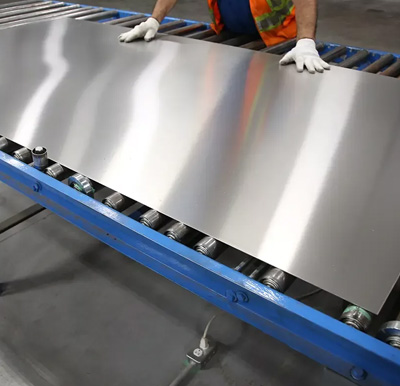
A Hairline finish creates a continuous, straight, fine-grain texture on the titanium surface. It is suitable for aerospace panels, equipment housings, decorative structural parts, and components requiring a controlled linear appearance.
A premium Hairline surface should provide:
Straight and continuous grain
Uniform texture across the full width
Consistent surface color
No vibration marks
No overlapping lines
No blind grinding areas
Stable roughness from plate to plate
Lebon Hairline lines use precision belt tracking, controlled feed speed, stable grinding pressure, and wet processing technology to improve surface consistency.
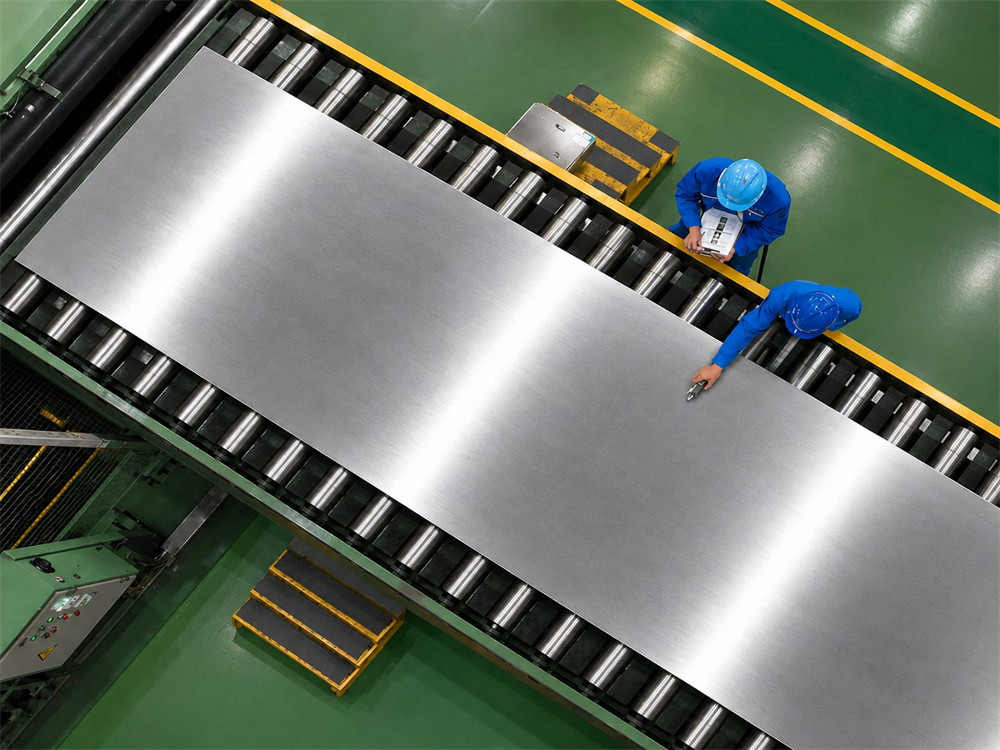
Mirror polishing requires several grinding and polishing stages. Each stage must remove the scratches left by the previous abrasive while maintaining flatness and preventing overheating.
A typical process may include:
Material inspection
Surface preparation
Rough grinding
Intermediate grinding
Fine grinding
Mirror polishing
Cleaning
Drying
Protective-film application
The exact process depends on the titanium grade, starting surface, required roughness, component geometry, and customer quality standard.
For TC4, the equipment must maintain high rigidity and precise pressure because the material requires greater grinding force. For TA1, pressure must be carefully controlled to avoid excessive deformation or uneven stock removal.
Lebon provides complete titanium finishing solutions that can integrate:
Wet abrasive-belt grinding
Rough and intermediate grinding
Fine grinding
Hairline finishing
Mirror polishing
Coolant circulation and filtration
Automatic belt tracking
PLC control
Cleaning and drying
Protective-film lamination
Automatic loading and unloading
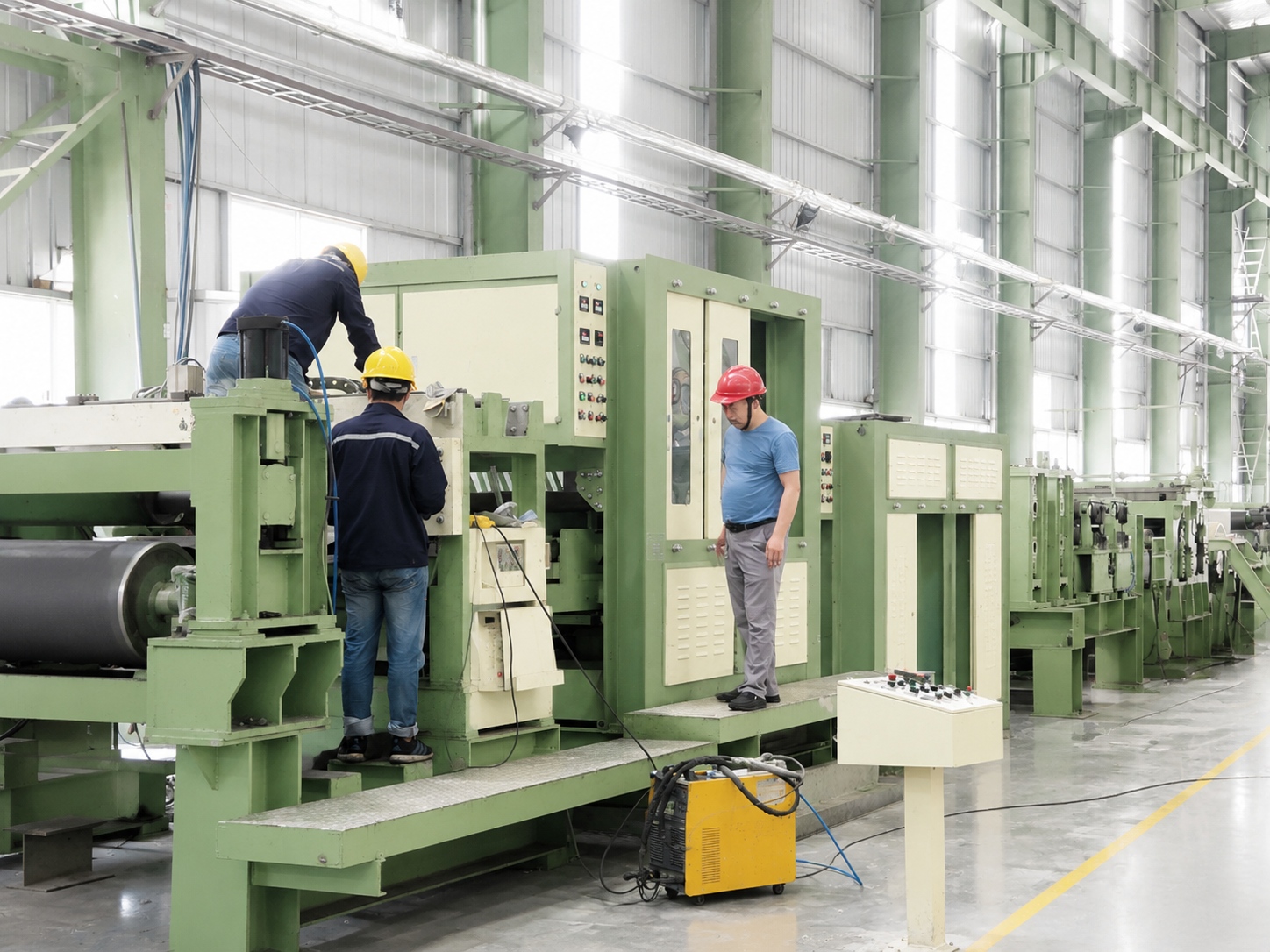
The production line can be designed as an individual machine, a sheet-to-sheet line, or a customized automated system according to the customer's production capacity and process requirements.
A reinforced machine frame reduces vibration under heavy grinding loads and helps maintain consistent surface quality.
Stable contact pressure helps prevent local overheating, uneven material removal, and inconsistent grain.
A properly designed coolant system removes heat and grinding residue while improving abrasive performance.
Automatic tracking keeps the abrasive belt centered, reducing deviation and maintaining uniform grinding across the workpiece.
Consistent feed speed improves repeatability and prevents visible differences between separate processing areas.
Operators can manage feed speed, grinding parameters, production sequences, and operating status through the control system.
Lebon titanium grinding and polishing solutions help manufacturers achieve:
Lower risk of grinding burns
Reduced oxidation and discoloration
Consistent Hairline texture
Stable mirror-polishing quality
Uniform material removal
Improved surface integrity
Longer abrasive-belt life
Better production repeatability
Lower rework rates
Higher production efficiency
Finished titanium plates and components can be used in:
Aircraft structural assemblies
Aerospace equipment panels
Engine-related structural parts
Precision brackets and fixtures
Interior aerospace components
Titanium housings and covers
Lightweight high-strength structures
Ground-support and testing equipment
The appropriate surface finish depends on the function of the component. Hairline finishing is suitable for uniform linear surfaces, while mirror polishing is selected when lower roughness, easier cleaning, higher reflectivity, or premium appearance is required.
Lebon specializes in metal surface finishing equipment for stainless steel, aluminum, titanium, and high-performance alloys.
For aerospace titanium applications, we provide:
Solutions for TC4 and TA1
Wet grinding process design
Hairline and mirror-finish configurations
Customized equipment based on workpiece requirements
Precision pressure and feed control
Complete coolant circulation systems
Automated material handling options
Installation, commissioning, training, and after-sales support
Our engineering team evaluates the customer's titanium grade, dimensions, initial surface, production capacity, and required finish before recommending the equipment configuration and polishing process.
Wet grinding provides continuous cooling, lubrication, and residue removal. It reduces grinding temperature, lowers the risk of burns and oxidation, and improves surface consistency.
Yes. TC4 has greater strength and hardness, resulting in higher grinding forces, greater heat generation, and faster abrasive wear. It requires more stable equipment and stricter pressure control.
Yes. TC4 and TA1 can both achieve high-quality mirror finishes with the correct abrasive sequence, pressure control, coolant system, and polishing equipment.
A production line can be customized with different grinding and polishing sections to support multiple finishes. The final configuration depends on the required output, processing sequence, and workpiece specifications.
Titanium surface finishing for aerospace applications requires careful control of heat, grinding pressure, abrasive movement, and feed speed. TC4 and TA1 respond differently during processing, but both can achieve consistent Hairline or mirror finishes with the correct equipment and process design.
Lebon's Wet Grinding, Hairline and Mirror Polishing Lines are designed to reduce grinding-burn risks, control thermal damage, and maintain stable surface quality on titanium plates and aerospace structural components.
Contact Lebon with your titanium grade, workpiece dimensions, starting surface, production capacity, and required finish. Our engineering team will recommend a customized wet grinding, Hairline, or mirror polishing solution for your aerospace project.
Please, feel free to contact us if you need any further information.
Copyright © Lebon Metal Equipment Co., Ltd. All Rights Reserved.
Design by BONTOP.
 En
En