


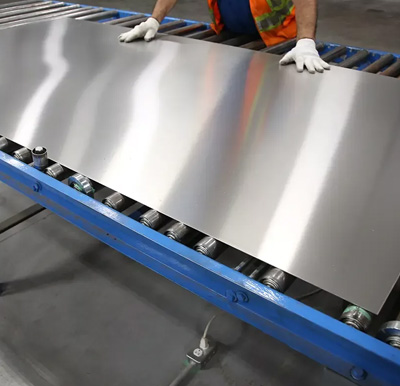
Robot Polishing System
Industrial Mirror Polishing Buffing Machine
8K Mirror Polishing Machine for Stainless Steel | Eco-Friendly Acid-Free System
Aluminium Plate Coil Mirror Polishing Machine
6K Mirror Buffing Polishing Machine for Metal Surfaces
High-precision metal mirror polishing machine
Pneumatic-pressure 8K Mirror Polishing Machine
Belt-type 8K Mirror Stainless Steel Polishing Machine
High Gloss Mirror Buffing &Polishing Machine
No.8 8K Finishing Mirror Buffing Polishing Machine
Super 8K Mirror Polishing Machine
Industrial Metal Buffing Machine
Titanium Surface Mirror Buffing Machine
Coil To Coil No.4 Finished Grinding Line
Sheet To Sheet NO.4 Finished Grinding Line
Metal Coil Grinding Machine
Metal Sheet Brushing Machine
Copper Polishing Grinding Machine
Titanium Surface Polishing Brushing Machine
Aluminum Plate Polishing Brushing Machine
Stainless No.4 Grinding Machine
Belt Brushing & Grinding Machine
Stainless HL Grinding Machine
Roller HL Grinding Machine
Belt HL Brushing Machine
Dry HL Finishing Machine
Wet HL Finishing Machine
Dry No.4 &HL Grinding Machine Line
Wet No.4 &HL Brushing Machine Line
Scotch-Brite finished Machine For Metal Surface
Scotch-Brite Finished Machine
Stainless Steel Scotch Brite Polishing Machine
Wet Scotch Brite Machine Line
Fully Automatic Scotch Brite(SB) Machine Line
SB Oscillator Machine
SB Grinding Machine
Scotch Brite with Oscillator
Dry Scotch Brite Machine
Four roller Scotch Brite Grinding Machine
Thick Board Stainless Steel Vibration Grinding Machine
Vibration Grinding
Stainless Steel Vibration Grinding Machine
AFP machine
Anti-Fingerprint Roller Coater machine
Anti-Fingerprint Pre-coated machine
Anti-Fingerprint Film Coating machine
Anti-Fingerprint Nano-Coating machine
Precision Sheet Cutting Line for Decorative Metal Processing
Leveling and Precision Cutting Line for Metal Sheet Processing
Automatic Coil Uncoiling
Industry news
By:Lebon
Jun 22,2026
Metal polishing industry and technology has more than 100 years of history. It started since the industrial revolution and developed with the technological revolution. Now Metal Polishing service includes stainless steel polishing, aluminum polishing and titanium surfaces polishing and so on, which also can be divided into rough metal polishing, medium polishing, and fine polishing.
Rough polishing uses a hard wheel to grind or polish the material surface. Rough polishing is mainly used to remove burrs, scratches, rust marks, oxide scales, sand holes, air bubbles, welding slags, and various macroscopic defects to improve surface flatness and reduce surface roughness. Without a uniform surface smoothness after the material being rough polished, a bright surface cannot be obtained; the surface roughness should be from few tenths of micrometers to hundreds of micrometers.
The hard wheels here is generally be made of materials such as grinding wheels, abrasive belts etc.
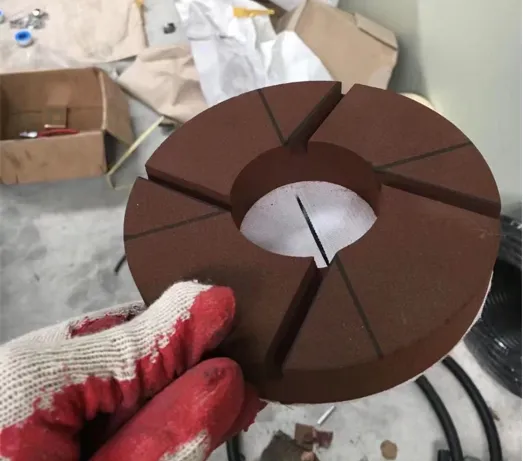
The medium polishing uses a harder polishing wheel. Further processing of the rough-polished surface removes scratches left by the rough-polishing process, resulting in a smooth to medium gloss finish. The surface roughness ranges from a few micrometers to a few tenths of a micrometer.
The polishing wheels here are generally made of materials such as scouring pads, non-woven fabrics etc.
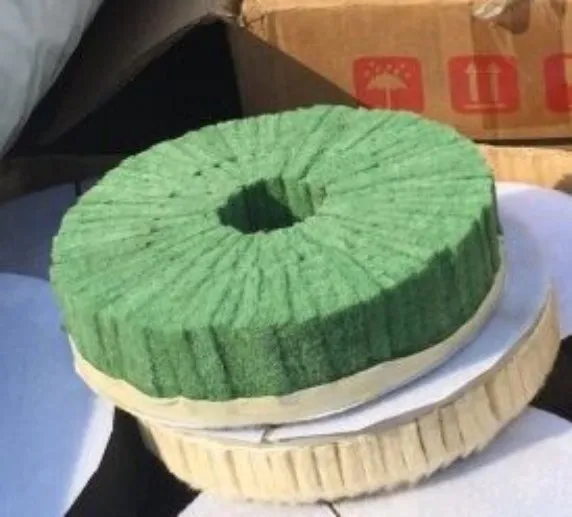
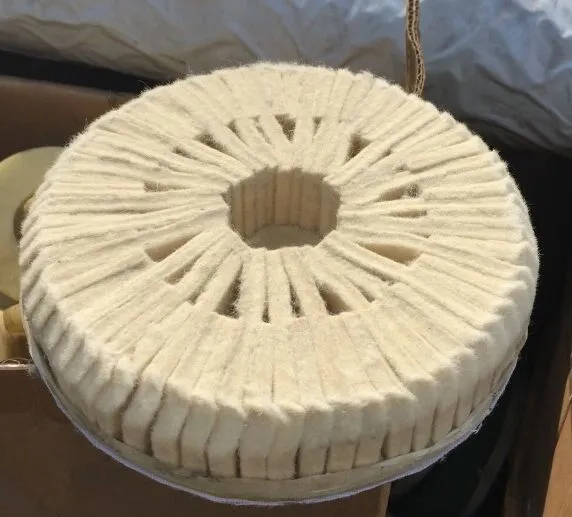
Fine polishing is the last process of polishing; it is a method of processing the surface of the part using chemicals and soft hairy disks. Since it is carried out on a relatively flat surface, it can further increase the smoothness of the surface to achieve the purpose of microscopic flatness and a very bright surface can be achieved. The material surface is not worn during polishing and its surface roughness reaches to about 0.1 micrometer, resulting a mirror brightness.
Fine polishing materials generally used are wool felt, sponge and other materials.
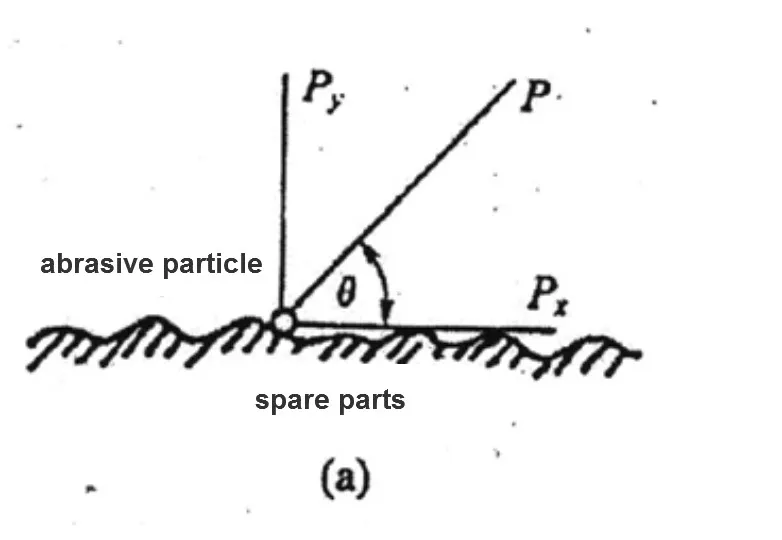
In summary, mechanical polishing means that the polishing wheel attached to the machine is rotating at a high speed; the operator presses the polishing wheel on the surface of workpiece with appropriate pressure. During this time, high heat is generated due to friction, which increases the temperature of workpiece; the surface is easily deformed to form a layer of "processing deformation layer". As shown in Figure below (Fig. a), it can be seen that the cutting force P of the abrasive particles on the polished surface is decomposed into a horizontal component force (Px) and a vertical component force (Py), where Px produces a bending distance at the convex peak of the workpiece surface, resulting a flattening effect, while Py produces chilling effect on the surface of the workpiece.
Under the action of the frictional force generated by the rotating wheel, some protruding surface parts are cut off; at the same time, the metal surface will also undergo plastic deformation, resulting the protruding parts being pressed in or moved to a certain distance to fill into the concave hole. This process of cutting protruding part and concave filling is repeated on a large scale during a high speed along with the brightening effect of the polishing materials used; the result is that the original rough surface becomes smooth and bright.
Although a mirror-bright surface can be obtained by mechanical polishing, this surface is not a pure metal lattice surface; it may have scratches, deformations (such as shearing and tearing), abrasive embedding or surplus polishing materials.
The defects on the metal surface used for decoration can be ignored but these defects are very serious for the PVC material. There are scratches, depressions, polishing agent debris and other debris on the metal surface, forming a higher surface energy; the polymer is easily adsorbed in its center to form sticky spots and further polymerizes in these spots to aggravate them.
The R&D center of LEBON Machinery refers to the theory generated by a Japanese expert named Prof. Masahisa Matsunaga; his in-depth research on the processing metamorphic layer, the thickness of which is not constant and it varies with the materials used, processing methods and processing conditions. It means that the processing speed of the metamorphic layer is proportional to the polishing wheel pressure and inversely proportional to the particle size of the polishing abrasive. In addition, adding a high-efficiency surface cleaning agent during the polishing process can also obtain a clean surface.
At the end of 2021, the LEBON Machinery R&D Center officially announced that the mirror polishing of stainless-steel surfaces has broken through the technical barrier of acid-free 8K and achieved the results in laboratory scale. It is believed that the commercial scale of LEBON metal polishing service can be marketed in the near future. And through continuous in-depth research on acid-free polishing mirrors, we have mastered many properties of abrasive materials along with more varieties and solutions for metal polishing industry.
Please, feel free to contact us if you need any further information.
Copyright © Lebon Metal Equipment Co., Ltd. All Rights Reserved.
Design by BONTOP.
 En
En