


Robot Polishing System
Industrial Mirror Polishing Buffing Machine
8K Mirror Polishing Machine for Stainless Steel | Eco-Friendly Acid-Free System
Aluminium Plate Coil Mirror Polishing Machine
6K Mirror Buffing Polishing Machine for Metal Surfaces
High-precision metal mirror polishing machine
Pneumatic-pressure 8K Mirror Polishing Machine
Belt-type 8K Mirror Stainless Steel Polishing Machine
High Gloss Mirror Buffing &Polishing Machine
No.8 8K Finishing Mirror Buffing Polishing Machine
Super 8K Mirror Polishing Machine
Industrial Metal Buffing Machine
Titanium Surface Mirror Buffing Machine
Coil To Coil No.4 Finished Grinding Line
Sheet To Sheet NO.4 Finished Grinding Line
Metal Coil Grinding Machine
Metal Sheet Brushing Machine
Copper Polishing Grinding Machine
Titanium Surface Polishing Brushing Machine
Aluminum Plate Polishing Brushing Machine
Stainless No.4 Grinding Machine
Belt Brushing & Grinding Machine
Stainless HL Grinding Machine
Roller HL Grinding Machine
Belt HL Brushing Machine
Dry HL Finishing Machine
Wet HL Finishing Machine
Dry No.4 &HL Grinding Machine Line
Wet No.4 &HL Brushing Machine Line
Scotch-Brite finished Machine For Metal Surface
Scotch-Brite Finished Machine
Stainless Steel Scotch Brite Polishing Machine
Wet Scotch Brite Machine Line
Fully Automatic Scotch Brite(SB) Machine Line
SB Oscillator Machine
SB Grinding Machine
Scotch Brite with Oscillator
Dry Scotch Brite Machine
Four roller Scotch Brite Grinding Machine
Thick Board Stainless Steel Vibration Grinding Machine
Vibration Grinding
Stainless Steel Vibration Grinding Machine
AFP machine
Anti-Fingerprint Roller Coater machine
Anti-Fingerprint Pre-coated machine
Anti-Fingerprint Film Coating machine
Anti-Fingerprint Nano-Coating machine
Precision Sheet Cutting Line for Decorative Metal Processing
Leveling and Precision Cutting Line for Metal Sheet Processing
Automatic Coil Uncoiling
FAQ
By:Lebon
Jun 22,2026
Stainless steel is a kind of high alloy steel that can resist corrosion after grinding. It has a beautiful surface and does not need to undergo surface treatment such as color plating or paint. Therefore, many metal surface treatment machinery factories often do not do any paint treatment in order to show that their stainless steel, and the black material (the so-called black material is the name of general steel) must be antirust treated.
Classification of stainless steel

Stainless steel can be roughly divided into three categories: 200 series, 300 series and 400 series. Among them, 300 series is the most commonly used. 200 series and 400 series are definitely substitutes for 300 series. Strictly speaking, 400 series is not called stainless steel, but stainless iron. Because it does not contain nickel, it can be attracted by magnets. The 200 series and 300 series have nickel, so they are not magnetic and can't absorb iron.
304 is the most common variety in 300 series, so the price trend of the whole stainless steel can be judged from the price change of 304. 200 series contains less nickel, 400 series does not contain nickel, and 300 series contains the most nickel, so 300 series is the most affected by nickel price.
300 series can be simply divided into 304, 304L, 316, 316L, 321, 309S, 310S, etc. the distinction is based on the different content of various metal elements, and the characteristics of stainless steel with different content are also different. The difference between 304 and 304L lies in the different carbon (c) content. The one with L indicates low carbon, also known as low carbon. There is no difference between 316 and 316L.
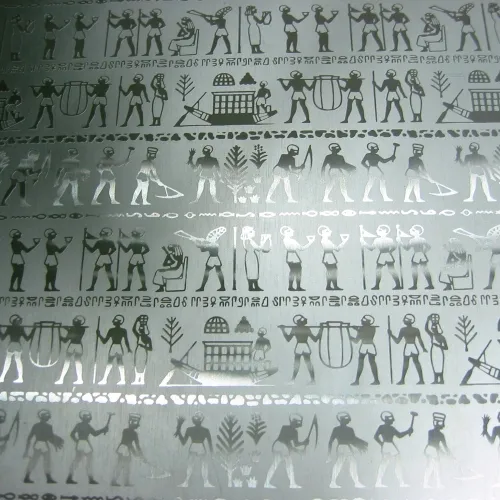
Morphological classification of stainless steel.
Stainless steel can be divided into five categories: coil, plate, profile, steel pipe and parts. The most important is coil and plate. Profiles are all kinds of different shaped materials made of plates, including angle steel, flat steel, I-beam and channel steel. Steel pipe mainly refers to seamless steel pipe. Compared with seamless steel pipe, it is welded pipe. The difference lies in whether it is formed at one time. Parts mainly refer to elbows, flanges and other small things.
Coiled materials and plates are actually the same, but the delivery form is different. Coiled materials are rolled one by one, and plates are one by one. If they are delivered from the factory, they are also called original plates, which are generally thick plates. Because they are very thick, they cannot be rolled, and generally they cannot be rolled above 16mm.
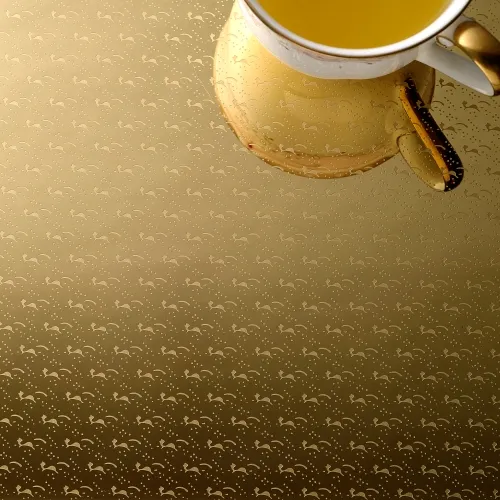
If there are rolls and plates, they are often plates, and the prices of rolls and plates are also different. If it is a purchased roll, it is calculated according to the actual weighing, so the price is high, and the price of plates is calculated according to the theory, but the price is low. The reason is that there is a difference. For example, the actual thickness of 10mm may be 9.6mm, and there will be a price difference in the middle.
Stainless steel plate is divided into hot rolling and cold rolling according to the rolling process of the rolling mill (the rolling mill is the name of the machine for rolling plate). Hot rolling is usually marked as No.1 and cold rolling is marked as 2B or BA (BA has a better and brighter surface than 2B, close to the mirror, and the best is the mirror. The mirror has no stock, so it needs to be processed). For example, 304 is often purchased, which means that the coil must be leveled into plate through the machine. This machine is the leveler.
Through the leveling machine, the leveling can be opened into different lengths. If it is not the conventional length, it is called fixed opening, which means fixed opening size. Because customers often put forward different length requirements according to actual needs. At this time, the roll is important, and the conventional plate can not meet the requirements.
Domestic cold rolling is generally less than 3mm, and hot rolling is generally more than 3mm. There are both hot rolling and cold rolling for 3mm thickness, but the thickness of imported cold rolled sheet can be less than 4mm or even less than 6mm. Hot rolled 3 mm to 12 mm plates are called medium plates, and those above 12 mm are called thick plates, which can be thicker than 120 mm. They are also called hot-rolled medium and thick plates, and cold rolling is cold-rolled thin plates.
Calculation method of theoretical weight of stainless steel plate
Plate weight = specific gravity × Thickness (mm) × Width (m) × Length (m) (mm is the unit of millimeter and M is the unit of meter)
In the field of construction machinery, due to the emphasis on precision and size, the unit of MM is adopted in the world. 1000mm = 1m, 1mm = 100 wires.
The weight obtained by this formula is kilogram (kg), which should be accurate to two decimal places. Because the price of stainless steel is expensive and the transaction volume is large, the number after the decimal point is also very important, so the money should also be accurate to two decimal places.
Specific gravity of stainless steel (kg)
Different stainless steels have different specific gravity:
A. The specific gravity of 400 series is 7.75
B,304.321.304N. 201.202.304L.. 301. The specific gravity is 7.93
C,310S. 309S. The specific gravity of 316.316l is 7.98.
Stainless steel number comparison table
Countries around the world have different names for stainless steel. The markets often contact China and the United States, which are called national standard and American Standard. The 200 series, 300 series and 400 series mentioned above are American Standard. American standard is usually called American standard because it is easy to understand.
National standard ============ American Standard
1cr17mn6ni5n========201
1cr18mn8ni5n========202
0cr18ni9============304
00cr19ni10==========304L
0cr18ni12mo2t=======316Ti
00cr17ni14mo2=======316L
0cr17ni12mo2========316
1cr18ni9ti==========321
0cr18ni10ti=========321
0cr23ni13===========309S
1cr20ni14===========309S
0cr25ni20===========310S
1cr25ni20===========310s
0cr13===============405
1cr13===============410
2cr13===============420
3cr13===============420
4cr3================430
The element content in the national standard Title generally refers to the intermediate value of the content, which is the theoretical value and can be large or small.
What is stainless steel’s tolerance
This is a very important term. Stainless steel’s Tolerance is the recognized allowable length or thickness deviation Because in the production process of plate, it is difficult for various reasons. The actual thickness is often less than the theoretical thickness. For example, for a 6mm plate of stainless steel, it is only 5.6mm, which is the tolerance. In China, the tolerance is often negative, of course, there are positive tolerances, but few.
When buying and selling on the board, it is usually calculated according to the theoretical thickness, which is why the theoretical price is lower than the weighted price. There are differences in tolerance and price, and the price with large tolerance is cheap For example, 6 mm, if it is less than 5.5, it is a large tolerance.
See the following table for 304 / 2B tolerance range (for reference only)
SPEC. | Large tolerance | Normal | Close Tolerance | No tolerance |
0.4MM | 0.3-0.32 | 0.33-0.37 | 0.37-0.39 | Above 0.39 |
0.5MM | 0.4-0.42 | 0.43-0.47 | 0.47-0.49 | Above 0.49 |
0.6MM | 0.5-0.52 | 0.53-0.57 | 0.57-0.59 | Above 0.59 |
0.7MM | 0.6-0.62 | 0.63-0.67 | 0.67-0.69 | Above 0.69 |
0.8MM | 0.7-0.72 | 0.73-0.77 | 0.77-0.79 | Above 0.79 |
0.9MM | 0.8-0.82 | 0.83-0.87 | 0.87-0.89 | Above 0.89 |
1.0MM | 0.89-0.91 | 0.91-0.94 | 0.94-0.99 | Above 0.99 |
1.2MM | 1.01-1.08 | 1.09-1.15 | 1.16-1.18 | Above 1.18 |
1.5MM | 1.32-1.38 | 1.39-1.45 | 1.46-1.48 | Above 1.48 |
2.0MM | 1.71-1.79 | 1.8-1.86 | 1.87-1.9 | Above 1.9 |
2.5MM | 2.23-2.38 | 2.39-2.42 | 2.42-2.47 | Above 2.47 |
3.0MM | 2.7-2.77 | 2.78-2.85 | 2.85-2.9 | Above 2.9 |
The tolerance range of hot rolled plate is shown in the table below (for reference only)
SPEC. | Large tolerance | Normal | Close Tolerance | No tolerance |
3.0MM | 2.6-2.75 | 2.75-2.85 | 2.86-2.9 | 2.9以上 |
4.0MM | 3.2-3.6 | 3.6-3.75 | 3.75-3.95 | 3.95以上 |
5.0MM | 4.2-4.6 | 4.6-4.75 | 4.75-4.95 | 4.95以上 |
6.0MM | 5.1-5.5 | 5.5-5.75 | 5.75-5.9 | 5.9以上 |
8.0MM | 7.2-7.5 | 7.5-7.75 | 7.75-7.95 | 7.9以上 |
10.0MM | 9.1-9.3 | 9.3-9.6 | 9.6-9.85 | 9.85以上 |
12.0MM | 11.1-11.2 | 11.2-11.6 | 11.6-11.85 | 11.85以上 |
14.0MM | 13.1-13.2 | 13.2-13.6 | 13.6-13.85 | 13.85以上 |
Characteristics and uses of main types of stainless steel
304: as a widely used steel, it has good corrosion resistance, heat resistance, low-temperature strength and mechanical property, good hot workability such as stamping and bending, no heat treatment hardening phenomenon, no magnetism, and the service temperature is from minus 193 ℃ to plus 800 ℃.
Uses: tableware, kitchenware, water heater, boiler, auto parts, medical equipment, food machinery, wine storage, pressure vessel (chemical machinery, chemical equipment).
As a low-carbon 304 steel, 304L has almost the same corrosion resistance as 304 in general, but it has good intergranular corrosion resistance after welding and stress relief. It can also maintain good corrosion resistance without heat treatment. It is generally used at 400 degrees,
Uses: petrochemical industry, building materials.
321 add Ti element to 304 steel to prevent intergranular corrosion. It is suitable for positive temperature below 430 to 900 degrees and non-magnetic;
Application: products that are not heat treated after welding, such as automobile exhaust, heat exchanger and container, are not suitable for making food processing equipment due to the addition of Ti element.
316 low carbon, added with Mo element, so its corrosion resistance, atmospheric corrosion resistance and high temperature strength performance are particularly good. It can be used under harsh conditions. It is suitable for use below 900 degrees. It is non-magnetic.
Application: equipment used in seawater, production equipment such as chemical industry, dye, papermaking, acetic acid and fertilizer, facilities in food industry and coastal areas, and products with special requirements for resistance to intergranular corrosion.
309S / 310S have high content of nickel and chromium, and increase the content of Si to make it have high temperature resistance and corrosion resistance. 309S can withstand repeated heating below 980, the service temperature of 310S can reach 1200 degrees, and the continuous service temperature can be 1150 degrees, which is non-magnetic.
Application: suitable for key parts such as high-temperature electric furnace equipment and drying equipment, furnace materials, aviation, petrochemical, electric power, etc.
The 200 series is similar to 304, which is cheap and economical.
Uses: food processing utensils, kitchen equipment, food processing equipment, filters, milk cans, durable consumer goods, washing machine accessories, water heaters, steel furniture, building decoration and decoration. In terms of fatigue resistance, 201 has higher hardness and toughness than 304, but the fatigue resistance of 304 is better.
Please, feel free to contact us if you need any further information.
Copyright © Lebon Metal Equipment Co., Ltd. All Rights Reserved.
Design by BONTOP.
 En
En