


Robot Polishing System
Industrial Mirror Polishing Buffing Machine
8K Mirror Polishing Machine for Stainless Steel | Eco-Friendly Acid-Free System
Aluminium Plate Coil Mirror Polishing Machine
6K Mirror Buffing Polishing Machine for Metal Surfaces
High-precision metal mirror polishing machine
Pneumatic-pressure 8K Mirror Polishing Machine
Belt-type 8K Mirror Stainless Steel Polishing Machine
High Gloss Mirror Buffing &Polishing Machine
No.8 8K Finishing Mirror Buffing Polishing Machine
Super 8K Mirror Polishing Machine
Industrial Metal Buffing Machine
Titanium Surface Mirror Buffing Machine
Coil To Coil No.4 Finished Grinding Line
Sheet To Sheet NO.4 Finished Grinding Line
Metal Coil Grinding Machine
Metal Sheet Brushing Machine
Copper Polishing Grinding Machine
Titanium Surface Polishing Brushing Machine
Aluminum Plate Polishing Brushing Machine
Stainless No.4 Grinding Machine
Belt Brushing & Grinding Machine
Stainless HL Grinding Machine
Roller HL Grinding Machine
Belt HL Brushing Machine
Dry HL Finishing Machine
Wet HL Finishing Machine
Dry No.4 &HL Grinding Machine Line
Wet No.4 &HL Brushing Machine Line
Scotch-Brite finished Machine For Metal Surface
Scotch-Brite Finished Machine
Stainless Steel Scotch Brite Polishing Machine
Wet Scotch Brite Machine Line
Fully Automatic Scotch Brite(SB) Machine Line
SB Oscillator Machine
SB Grinding Machine
Scotch Brite with Oscillator
Dry Scotch Brite Machine
Four roller Scotch Brite Grinding Machine
Thick Board Stainless Steel Vibration Grinding Machine
Vibration Grinding
Stainless Steel Vibration Grinding Machine
AFP machine
Anti-Fingerprint Roller Coater machine
Anti-Fingerprint Pre-coated machine
Anti-Fingerprint Film Coating machine
Anti-Fingerprint Nano-Coating machine
Precision Sheet Cutting Line for Decorative Metal Processing
Leveling and Precision Cutting Line for Metal Sheet Processing
Automatic Coil Uncoiling
Metal Surface Finishing Equipment Industry News
By:Lebon
Sep 24,2026
An 8K mirror finish can look excellent as it leaves the last polishing head, yet still fail final inspection. Residual polishing liquid may dry into marks. Water left at the sheet edges can stain the surface. A clean sheet can then pick up fingerprints or scratches during transfer and stacking.
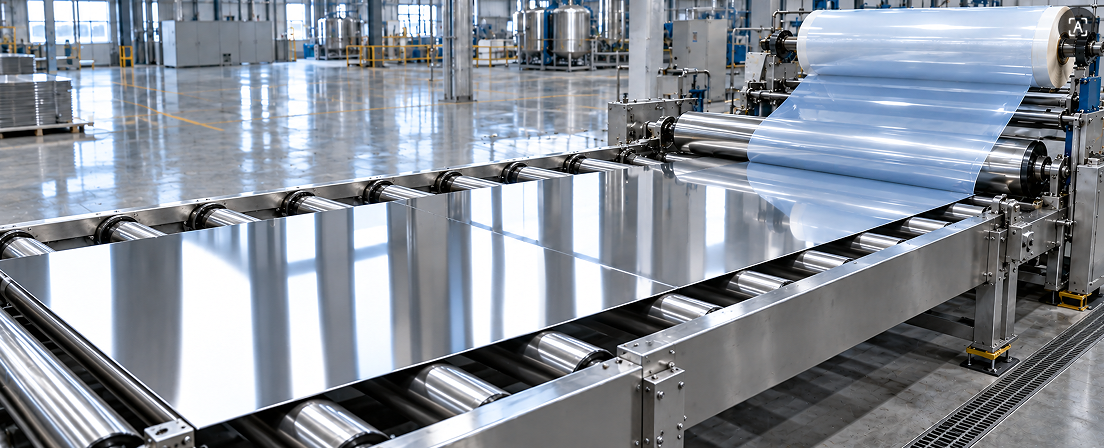
For a sheet-to-sheet 8K line, the finishing process therefore continues after polishing: **wash, remove water, dry, apply protective film and unload.** These stages need to work together at the same line speed.
1. Remove polishing residue before it dries
Rough and fine polishing leave process liquid and loose particles on the stainless steel sheet. If they remain on the surface, they can create spots or interfere with the next handling step.
In LEBON's proposed 12-group sheet-to-sheet 8K line, the washing section combines brushes with clean-water spraying to clean both sides of the sheet. The cleaning setup should be matched to the polishing liquid, sheet size and required finish. Operators also need to monitor water cleanliness and brush condition; a dirty brush or contaminated rinse can bring defects back onto a polished surface.
2. Remove most of the water before air drying
An air knife performs best when it is finishing the drying process, rather than trying to remove a heavy water film by itself. Absorption and squeeze rollers first remove most of the surface water. Air knives then clear the remaining water and help reduce water marks.
Pay particular attention to the sheet edges, where water can be harder to remove. The practical acceptance check is simple: inspect the sheet immediately after drying and again after it has stood for a short period. A surface that appears dry at the outlet can still show marks later if moisture remains at the edges or in the film interface.
3. Apply film only to a clean, dry sheet
Protective film helps shield the finished face during unloading, stacking, storage and transport. It cannot correct a polishing defect or hide residue underneath it. If film is applied over moisture or particles, those contaminants are trapped against the mirror surface.
Film selection also matters. Adhesive behavior, film width and the required upper or lower surface coverage should be agreed before final line configuration. Sheet squareness and accurate edge detection affect how consistently the film is positioned and cut.
4. Keep the whole line synchronized
A good washing and laminating section cannot compensate for unstable transfer between machines. Conveyor speeds, sheet spacing, edge sensing and unloading sequence should be coordinated so the finished sheet does not stop unnecessarily or contact a dirty surface.
For a 12-group 8K arrangement, LEBON's proposed flow is: **automatic loading → four rough-polishing groups → eight fine-polishing groups → washing → water-removal rollers → air-knife drying → transfer → protective-film lamination → automatic unloading. The exact configuration should be confirmed against the customer's sheet sizes, incoming 2B surface, production target and approved finish sample.
What should buyers check during a sample trial?
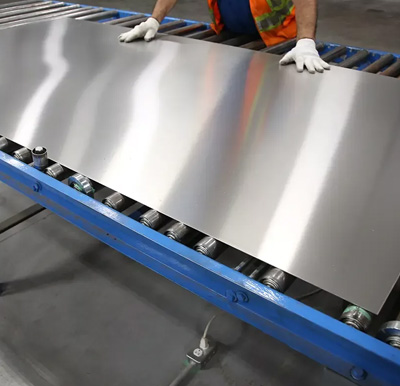
- Inspect the sheet under agreed lighting for water stains, white spots, polishing marks and handling scratches.
- Compare the head, middle and tail, as well as the left, center and right positions.
- Check whether both surfaces and the sheet edges are fully dry before film application.
- Inspect the sheet again after film removal to make sure no moisture or residue was trapped.
- Run representative production sheets at the intended operating speed, rather than judging a single slow sample.
A mirror finish is a finished product only when it reaches the stack clean, dry and protected.When evaluating an 8K line, ask how the polishing, washing, drying, film application and handling stages perform as one continuous process.
Planning an 8K mirror polishing line? Send LEBON your material grade, incoming surface, sheet thickness and size, target finish sample, and daily output target. We can review the process layout and propose a suitable configuration.
Please, feel free to contact us if you need any further information.
Copyright © Lebon Metal Equipment Co., Ltd. All Rights Reserved.
Design by BONTOP.
 En
En