


Robot Polishing System
Industrial Mirror Polishing Buffing Machine
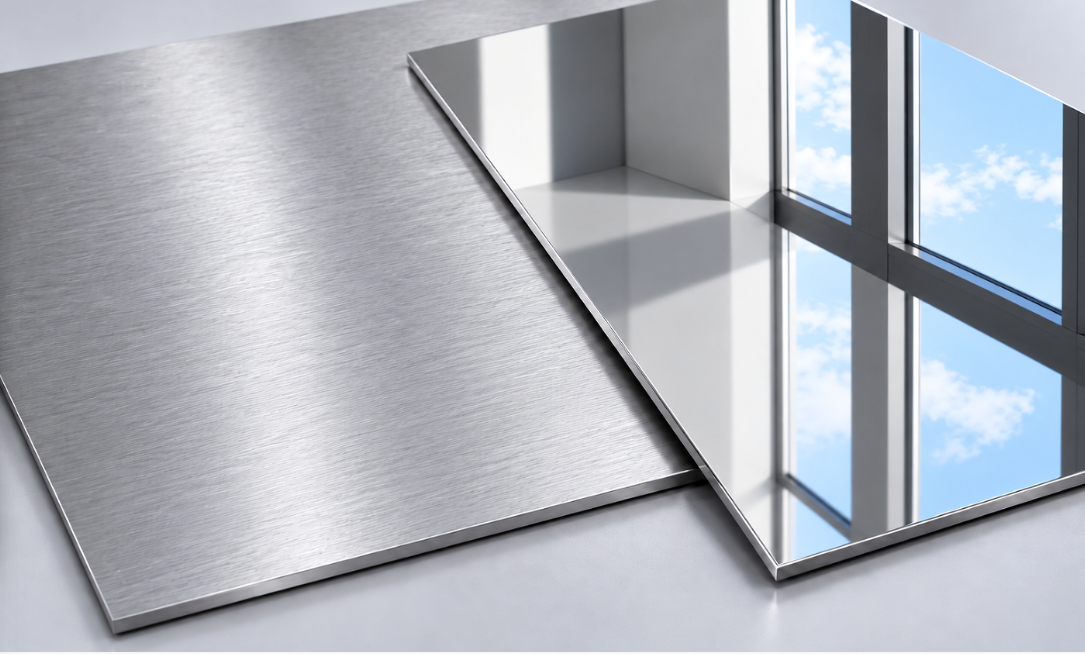
8K Mirror Polishing Machine for Stainless Steel | Eco-Friendly Acid-Free System
Aluminium Plate Coil Mirror Polishing Machine
6K Mirror Buffing Polishing Machine for Metal Surfaces
High-precision metal mirror polishing machine
Pneumatic-pressure 8K Mirror Polishing Machine
Belt-type 8K Mirror Stainless Steel Polishing Machine
High Gloss Mirror Buffing &Polishing Machine
No.8 8K Finishing Mirror Buffing Polishing Machine
Super 8K Mirror Polishing Machine
Industrial Metal Buffing Machine
Titanium Surface Mirror Buffing Machine
Coil To Coil No.4 Finished Grinding Line
Sheet To Sheet NO.4 Finished Grinding Line
Metal Coil Grinding Machine
Metal Sheet Brushing Machine
Copper Polishing Grinding Machine
Titanium Surface Polishing Brushing Machine
Aluminum Plate Polishing Brushing Machine
Stainless No.4 Grinding Machine
Belt Brushing & Grinding Machine
Stainless HL Grinding Machine
Roller HL Grinding Machine
Belt HL Brushing Machine
Dry HL Finishing Machine
Wet HL Finishing Machine
Dry No.4 &HL Grinding Machine Line
Wet No.4 &HL Brushing Machine Line
Scotch-Brite finished Machine For Metal Surface
Scotch-Brite Finished Machine
Stainless Steel Scotch Brite Polishing Machine
Wet Scotch Brite Machine Line
Fully Automatic Scotch Brite(SB) Machine Line
SB Oscillator Machine
SB Grinding Machine
Scotch Brite with Oscillator
Dry Scotch Brite Machine
Four roller Scotch Brite Grinding Machine
Thick Board Stainless Steel Vibration Grinding Machine
Vibration Grinding
Stainless Steel Vibration Grinding Machine
AFP machine
Anti-Fingerprint Roller Coater machine
Anti-Fingerprint Pre-coated machine
Anti-Fingerprint Film Coating machine
Anti-Fingerprint Nano-Coating machine
Precision Sheet Cutting Line for Decorative Metal Processing
Leveling and Precision Cutting Line for Metal Sheet Processing
Automatic Coil Uncoiling
FAQ
By:Lebon
Sep 20,2026
Yes. A 201-grade stainless steel sheet with a 2B surface can be processed into an 8K mirror finish. However, the result depends on much more than adding polishing heads or extending polishing time. Compared with 304 stainless steel, 201 is generally harder, more prone to work hardening, and less forgiving when grinding heat, pressure and feed speed are not properly balanced.
The key is to build a stable rough-grinding surface before fine mirror polishing begins. If the original oxide layer, micro-pits and rolling marks are not removed evenly, the final sheet may look bright but still appear cloudy, whitish or uneven under strong light.
201 stainless steel contains less nickel and more manganese than 304. Its mechanical response during polishing is therefore different. In practice, 201 usually requires closer control of abrasive selection, grinding load, cooling and feed speed.
The main risks are local heating and work hardening. When the sheet becomes too hot, the surface becomes more difficult to cut consistently. Simply increasing pressure can make the problem worse by creating more heat, accelerating abrasive wear and increasing the chance of visible polishing marks.
304 stainless steel has a more moderate hardness and is usually easier to process into a stable mirror finish. This does not mean that 201 cannot achieve the same visual grade; it means that the process window is narrower and the rough-polishing stage must be better controlled.
For 201 2B sheet, rough polishing should remove the original surface oxide, shallow pits and rolling defects while leaving a uniform base for fine polishing. A practical intermediate target is a consistent surface around Ra 0.05 micrometres before the sheet enters the fine mirror-polishing section.
Two common mistakes lead to poor results:
· Abrasives that are too fine: The original oxide and micro-pits remain. After fine polishing, the sheet may be reflective but look pale or cloudy.
· Abrasives that are too coarse: The defects are removed, but deep grinding marks remain. Fine polishing may not have enough removal capacity to eliminate them completely.
This is why the grit sequence and the number of rough-polishing heads must be matched to the incoming sheet quality. For modern 201 and 304 2B sheets, a minimum of six rough-polishing groups is often recommended when a stable commercial 8K result is required. Fewer groups can make it difficult to combine defect removal with a sufficiently fine intermediate surface.
Cooling liquid must reach the active grinding zone evenly. Pressure and sheet speed should then be adjusted together so the abrasive cuts efficiently without overheating the plate. The correct setting is not simply the highest possible load; it is the load that removes the required amount while keeping the sheet temperature stable.
For repeat production, operators should monitor sheet temperature, motor load, surface appearance after each stage and abrasive condition. Recording these values by material grade and thickness makes future changeovers faster and more consistent.
After rough polishing has produced a clean and uniform base, fine polishing is normally performed with wool polishing discs and a controlled polishing compound. In a traditional chemical-mechanical process, the polishing medium may include aluminium oxide powder, water and nitric acid in a defined ratio. Acid-free mechanical polishing is also possible, but the achievable finish, cycle time and operating method should be confirmed with sample testing.
The fine-polishing section should improve reflectivity without reintroducing swirl marks, local haze or colour variation. More polishing heads can increase throughput, but additional heads cannot compensate for an unstable rough-polished surface.
A reliable inspection should combine instrument readings with visual checks. The following three criteria are commonly used for commercial 8K mirror sheet:
Inspection item | Recommended check |
Surface roughness | Final Ra below 0.02 micrometres. |
Gloss | Approximately 600 to 800 GU measured at a 60-degree angle, depending on the agreed product standard and instrument. |
Visual quality | No visible polishing-head arcs, swirl marks, haze, pits or uneven reflection under adequate lighting. |
Before finalising the machine configuration, the supplier should review the actual 201 grade, thickness range, sheet dimensions, incoming 2B surface, target gloss, target Ra and required output. Sample sheets are especially useful because 2B hardness and micro-pit conditions can vary between steel mills.
The line configuration should then be based on the real surface-removal requirement and production target. A lower-output project may use a compact rough-plus-fine polishing combination, while a high-output plant may require more polishing groups to maintain the same finish at a higher feed speed.
201 2B stainless steel can achieve a high-quality 8K mirror finish. The decisive factors are a correctly designed rough-polishing sequence, adequate cooling, balanced pressure and feed speed, and objective final inspection. When these variables are controlled, the higher hardness of 201 becomes a process-design issue rather than a barrier to mirror polishing.
No. Even at the same thickness, 201 generally needs different abrasive, pressure, cooling and speed settings because its hardness and work-hardening behaviour differ from 304.
Usually not. Fine polishing improves reflectivity, but it cannot reliably remove deep rough-grinding marks or defects that were left in the 2B surface.
Yes. Sample testing helps confirm the actual removal requirement, suitable grit sequence, achievable gloss and Ra, and expected production speed for the buyer's material.
Please, feel free to contact us if you need any further information.
Copyright © Lebon Metal Equipment Co., Ltd. All Rights Reserved.
Design by BONTOP.
 En
En