


Robot Polishing System
Industrial Mirror Polishing Buffing Machine
8K Mirror Polishing Machine for Stainless Steel | Eco-Friendly Acid-Free System
Aluminium Plate Coil Mirror Polishing Machine
6K Mirror Buffing Polishing Machine for Metal Surfaces
High-precision metal mirror polishing machine
Pneumatic-pressure 8K Mirror Polishing Machine
Belt-type 8K Mirror Stainless Steel Polishing Machine
High Gloss Mirror Buffing &Polishing Machine
No.8 8K Finishing Mirror Buffing Polishing Machine
Super 8K Mirror Polishing Machine
Industrial Metal Buffing Machine
Titanium Surface Mirror Buffing Machine
Coil To Coil No.4 Finished Grinding Line
Sheet To Sheet NO.4 Finished Grinding Line
Metal Coil Grinding Machine
Metal Sheet Brushing Machine
Copper Polishing Grinding Machine
Titanium Surface Polishing Brushing Machine
Aluminum Plate Polishing Brushing Machine
Stainless No.4 Grinding Machine
Belt Brushing & Grinding Machine
Stainless HL Grinding Machine
Roller HL Grinding Machine
Belt HL Brushing Machine
Dry HL Finishing Machine
Wet HL Finishing Machine
Dry No.4 &HL Grinding Machine Line
Wet No.4 &HL Brushing Machine Line
Scotch-Brite finished Machine For Metal Surface
Scotch-Brite Finished Machine
Stainless Steel Scotch Brite Polishing Machine
Wet Scotch Brite Machine Line
Fully Automatic Scotch Brite(SB) Machine Line
SB Oscillator Machine
SB Grinding Machine
Scotch Brite with Oscillator
Dry Scotch Brite Machine
Four roller Scotch Brite Grinding Machine
Thick Board Stainless Steel Vibration Grinding Machine
Vibration Grinding
Stainless Steel Vibration Grinding Machine
AFP machine
Anti-Fingerprint Roller Coater machine
Anti-Fingerprint Pre-coated machine
Anti-Fingerprint Film Coating machine
Anti-Fingerprint Nano-Coating machine
Precision Sheet Cutting Line for Decorative Metal Processing
Leveling and Precision Cutting Line for Metal Sheet Processing
Automatic Coil Uncoiling
Industry news
By:Lebon
Sep 13,2026
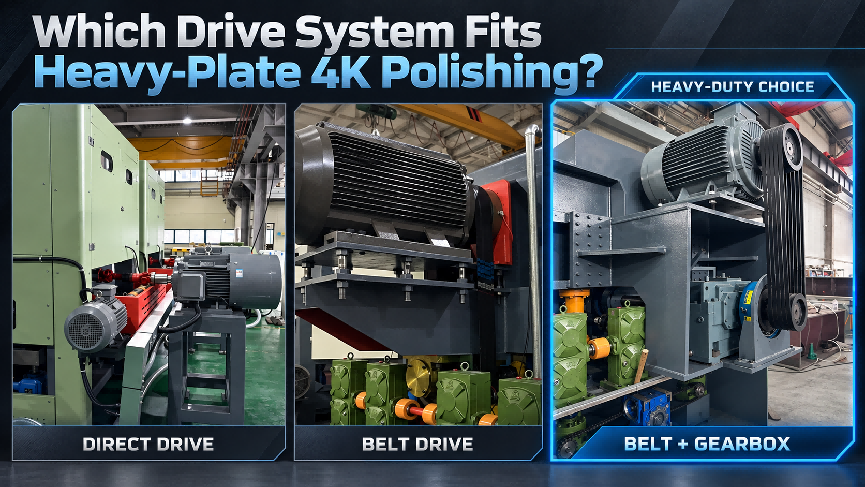
When a buyer sees a motor connected directly to a working roll, the design can appear compact and advanced. A belt-and-gearbox arrangement may look more complicated and may even be mistaken for a lower-cost solution. For hot-rolled thick-plate polishing, however, appearance does not determine performance. The important questions are how the drive handles torque, impact, uneven plate surfaces and continuous heavy-duty operation.
LEBON has used and evaluated three working-roll drive arrangements: direct drive, belt drive, and belt drive with a dedicated heavy-duty gearbox. For our hot-rolled thick-plate 4K polishing machines, we standardized the third arrangement after practical production experience showed that it was better suited to fluctuating grinding loads.
In this article, 4K refers to a grinding and polishing process used to improve the surface of hot-rolled stainless steel plates. It is not related to screen resolution. Hot-rolled thick plates may have scale, surface waviness and thickness variation, so the working roll does not see a perfectly stable load. When a high point on the plate enters the grinding zone, the drive system must absorb a rapid increase in resistance without repeated shutdowns or damage to the motor and inverter.
In a direct-drive arrangement, the motor is coupled directly to the working roll. The structure is compact, the transmission path is short and mechanical transmission losses can be low. It can be suitable when the grinding load is light and stable and the motor is correctly sized for the application.
The limitation appears when the load changes sharply. Impact from an uneven thick plate is transmitted directly to the motor and coupling. In the configurations tested by LEBON for heavy-plate production, this increased the risk of motor overload, inverter trips and production interruption. Meeting the peak-load requirement may also require a larger motor, which can increase installed power and energy use.
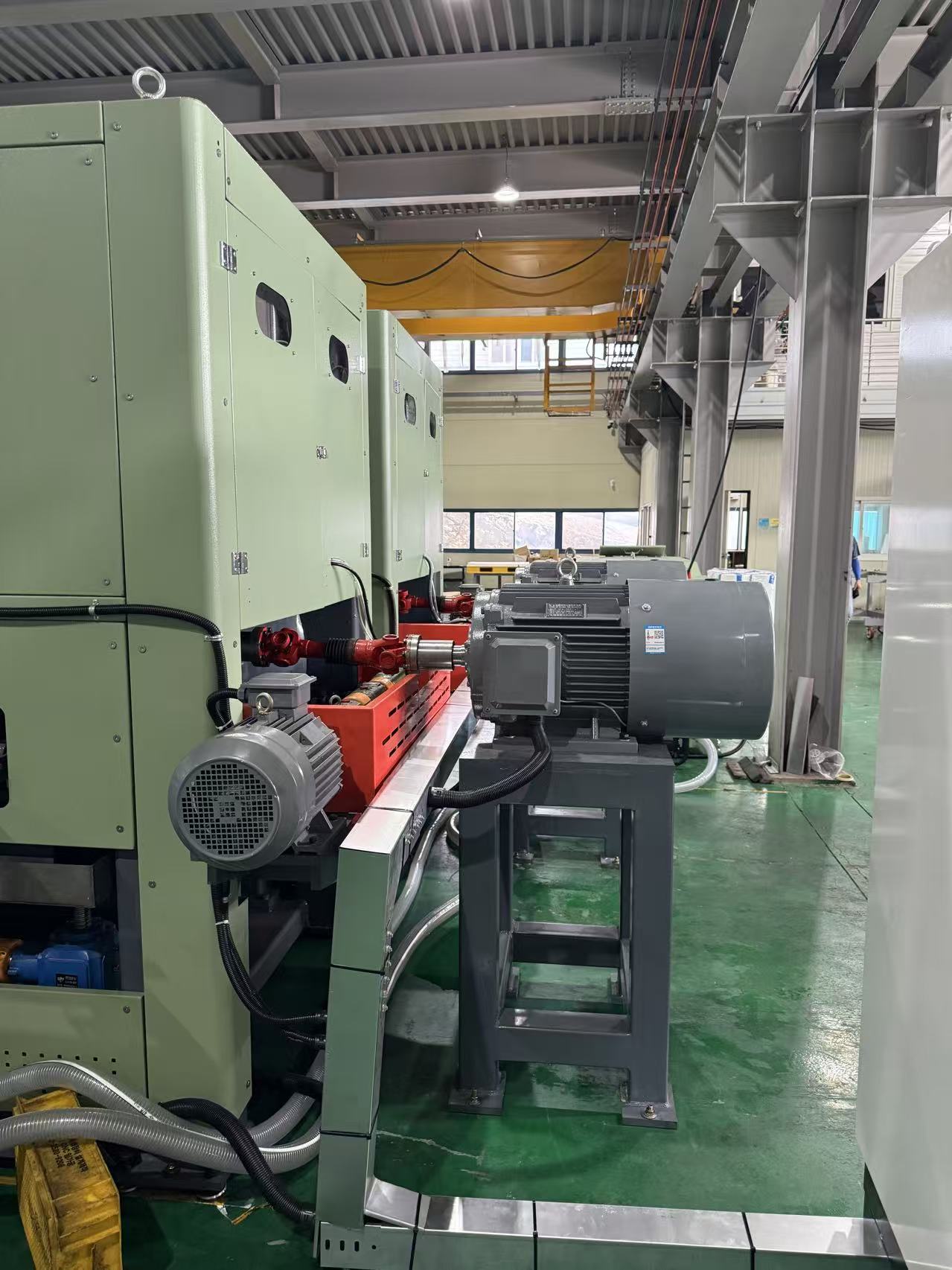
Figure 1 Direct-drive arrangement with the motor coupled to the working-roll system.
A belt drive separates the motor from the working roll and can absorb part of the shock load. Belts are also familiar maintenance items and are relatively easy to inspect and replace. This arrangement gives more cushioning than a rigid direct connection.
A conventional belt drive does not, by itself, provide the torque multiplication needed for demanding thick-plate grinding. Under a heavy or unstable load, belt slip and speed fluctuation can occur. For this reason, LEBON no longer uses a belt-only arrangement as the standard working-roll drive for continuous heavy-duty 4K polishing of hot-rolled thick plates.
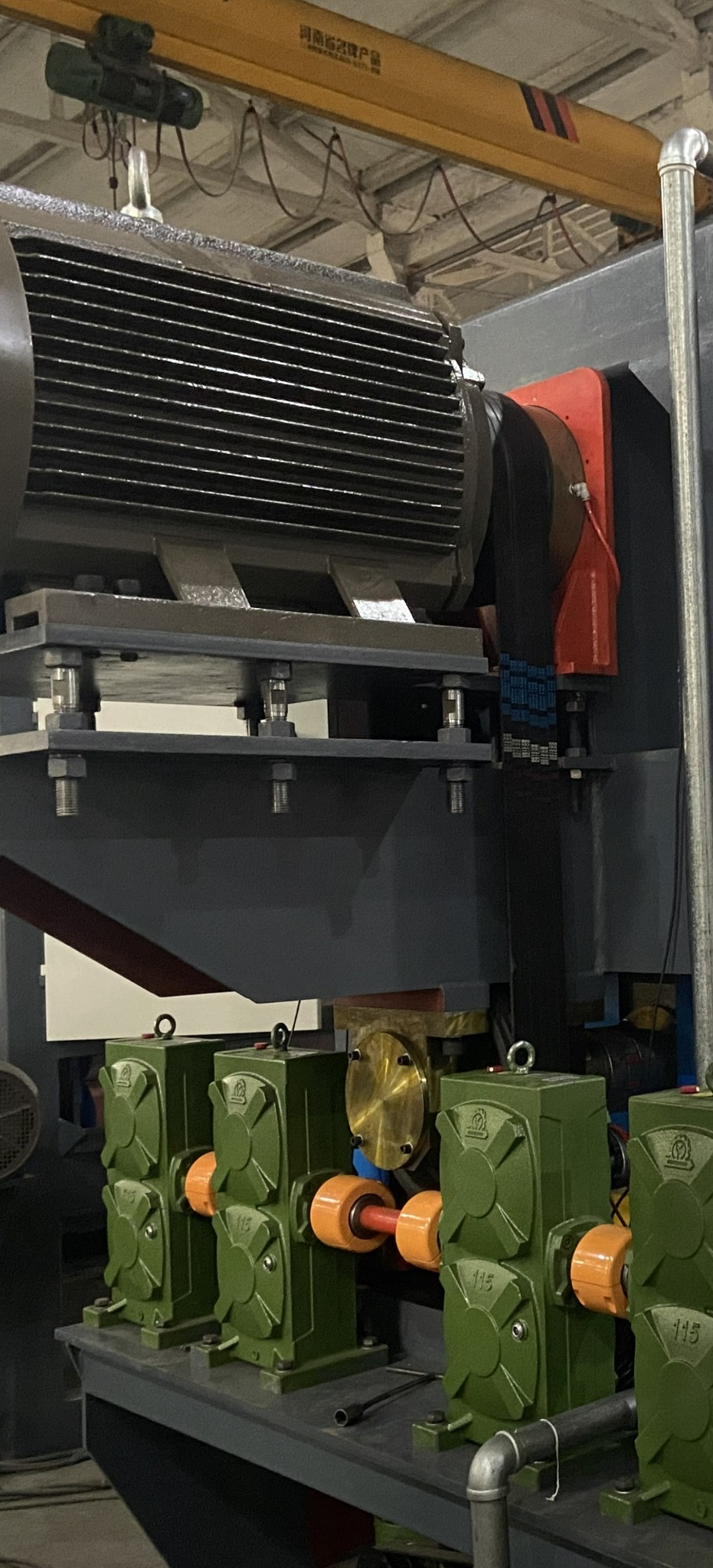
Figure 2 Belt-only drive arrangement.
In the selected LEBON design, the motor transmits power through multiple belts to a dedicated heavy-duty gearbox. The gearbox reduces speed and increases the torque delivered to the working roll, while the belt stage provides useful shock absorption. This is not a planetary gearbox selected for high positioning precision; it is a purpose-built reduction system for heavy grinding loads.
Based on LEBON internal operating comparisons with our earlier configurations, this arrangement approximately doubled available working-roll torque and reduced power consumption by about one third under the evaluated production conditions. Actual results depend on plate grade, thickness, flatness, abrasive sequence, grinding pressure and line settings. The design also reduced overload events and helped extend the working life of the motor and inverter.
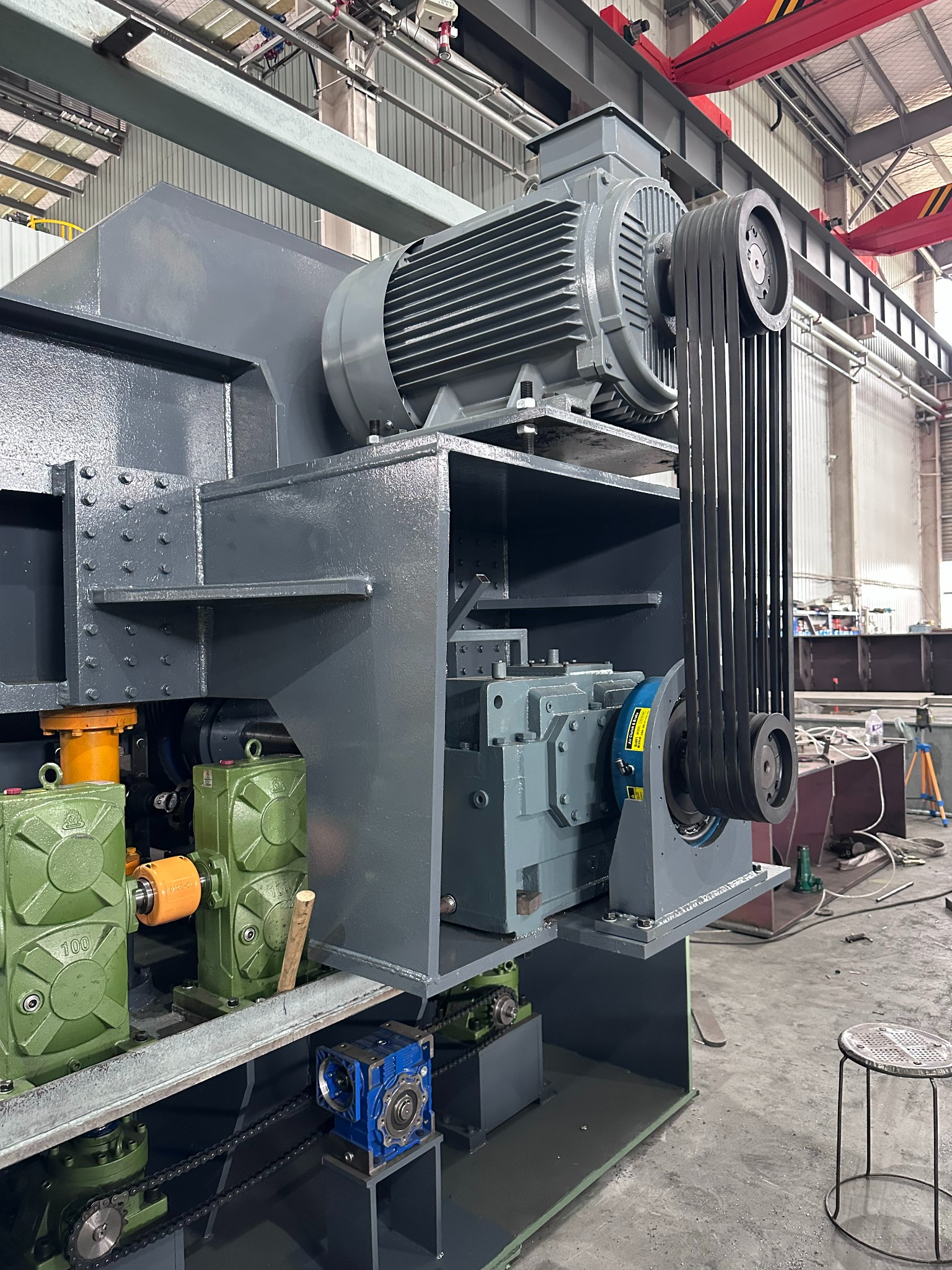
Figure 3 LEBON belt drive with a dedicated gearbox for hot-rolled thick-plate 4K polishing.
Criterion | Direct drive | Belt drive | Belt and gearbox |
Transmission path | Shortest | Flexible belt stage | Flexible belt stage plus reduction |
Shock absorption | Low | Medium | Medium to high |
Torque multiplication | None from transmission | Limited | High through speed reduction |
Response to uneven plate load | Load passes directly to motor | Partly cushioned; slip may occur | Cushioned with higher available torque |
Continuous heavy-duty stability | Application dependent | Limited in LEBON tests | Selected by LEBON |
LEBON hot-rolled thick-plate 4K use | Not standard | Not standard | Standard configuration |
A direct connection is not inherently good or bad. Its suitability depends on the load profile, motor sizing, coupling design and protection strategy. Likewise, the presence of belts does not automatically indicate cost cutting. In a heavy-duty polishing machine, a more appropriate engineering question is: how does the drive behave when the plate is uneven and the grinding resistance suddenly rises?
For LEBON, the answer came from production rather than appearance. We first used direct drive and belt-only systems, observed their behavior as processing volume increased, and then developed a dedicated reduction arrangement. The current design reflects the requirements of hot-rolled thick plates: higher low-speed torque, better tolerance of impact loading, fewer overload interruptions and stable operation over long shifts.
Before selecting or comparing a polishing machine, buyers should provide the actual production range and evaluate the following points:
· Plate material, thickness, width, length and typical flatness;
· Incoming surface condition and the amount of material to be removed;
· Target finish and abrasive sequence;
· Required throughput and continuous operating hours;
· Peak grinding pressure and expected load variation;
· Motor, inverter and overload-protection strategy;
· Maintenance access, belt inspection and gearbox service requirements.
A direct drive can reduce mechanical transmission losses, but total production efficiency also depends on whether the system can maintain stable grinding under peak loads. Repeated overload trips, reduced grinding pressure or an oversized motor can offset the benefit of a shorter transmission path.
No. Belt transmission can provide shock absorption and serviceability. Its suitability depends on belt sizing, pulley arrangement, tension control and whether additional torque multiplication is required.
A reduction gearbox converts motor speed into higher working-roll torque. This helps the machine handle changing grinding resistance caused by plate waviness and heavy stock removal.
LEBON uses AC variable-frequency motors because they provide adjustable speed, reliable operation in industrial polishing environments and practical maintenance. DC motors generally demand more maintenance and stricter operating conditions for this application.
No. Thin cold-rolled sheets, coils and hot-rolled thick plates create different load conditions. The drive system should be selected around the actual material range, surface condition, output target and duty cycle.
The best drive system is not the one that looks most familiar or copies a well-known machine. It is the one that performs reliably under the real production load. For hot-rolled thick-plate 4K polishing, LEBON uses a belt drive with a dedicated heavy-duty gearbox because our practical operating experience showed better torque delivery, load tolerance and long-term stability than the earlier configurations we tested.
To discuss a 4K polishing solution for your plate thickness, width, surface condition and output requirement, contact LEBON MACHINERY or submit your production specifications through our website.
Please, feel free to contact us if you need any further information.
Copyright © Lebon Metal Equipment Co., Ltd. All Rights Reserved.
Design by BONTOP.
 En
En